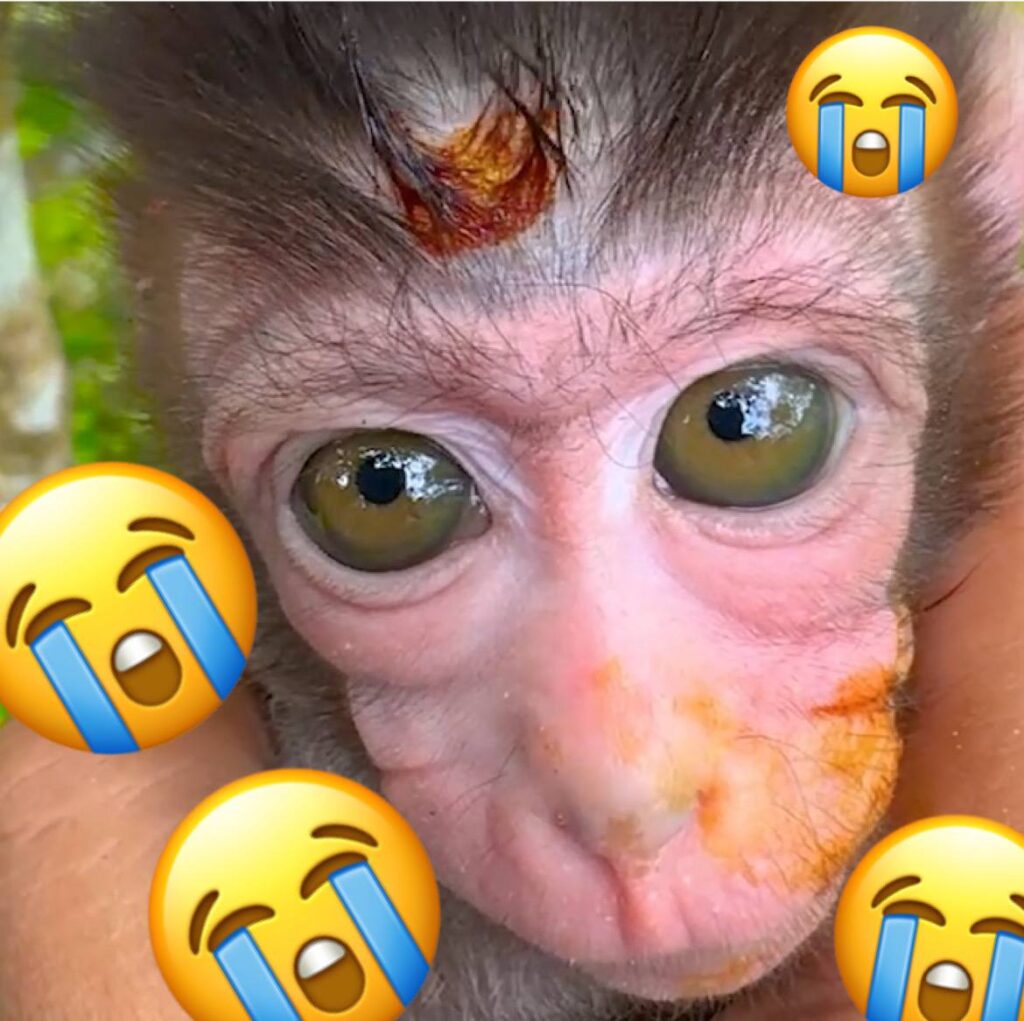
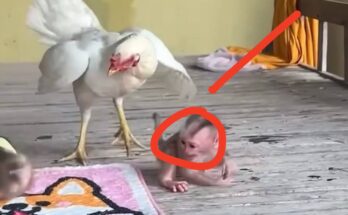
In a quiet forest over the weekend, wildlife rescuers discovered a baby monkey with a head injury. The wound appeared serious and caused the little monkey considerable pain. The baby monkey stood patiently with its family but was unable to walk or move easily.
The rescuers immediately examined it and carefully transported it to a wildlife rescue center. Initial care included cleaning the wound, dressing it, and administering pain-relieving medication. Afterwards, the monkey was placed in a calm, safe environment with daily health monitoring by caretakers.
This rescue was timely, as leaving the injury untreated could have caused life-threatening complications. The rescuers understood that careful observation and prompt intervention are crucial for injured wildlife.
Ongoing care for the monkey included small nutritious meals, rest in a secure environment, and a habitat set up to resemble its natural surroundings. Within a few days, the baby monkey recovered well and was able to return to its family.
This story demonstrates that observation and rapid action are essential in protecting wildlife. Timely rescue not only saves lives but also increases the chances of animals living healthy and safe lives.