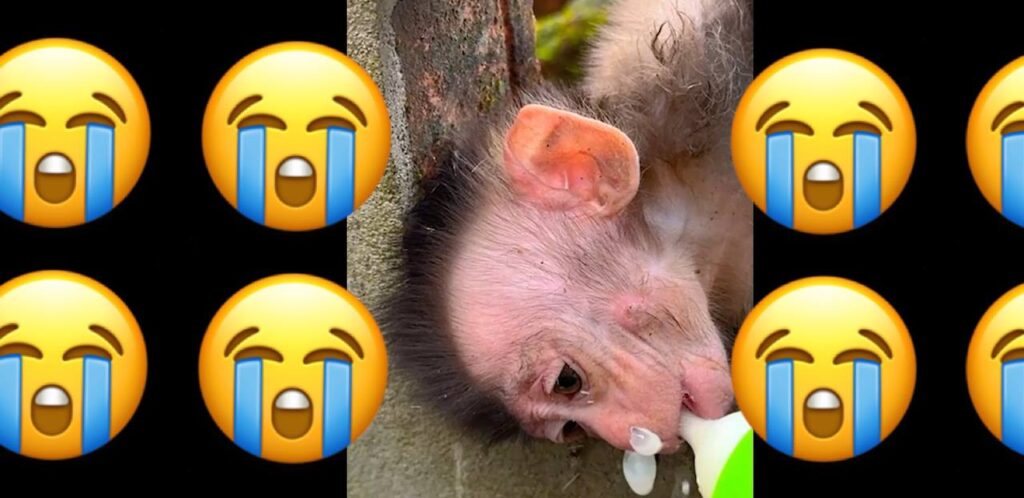
Caring for a baby monkey requires great attention, especially when it comes to feeding. Many caretakers use cow’s milk because it is easy to find, but if given incorrectly, it can cause serious health problems.
First, cow’s milk contains high lactose and high fat, which a baby monkey’s stomach cannot digest well. If fed too much or mixed too strongly, the baby may develop severe diarrhea, gas, and stomach bloating. All of these can lead to severe dehydration, which is extremely dangerous for newborn monkeys.
The second issue is gastric inflammation. Incorrect feeding can cause vomiting, stomach pain, and loss of appetite. Over time, this weakens the monkey’s body and its immune system.
Another serious problem is nutrient deficiency, because cow’s milk does not contain the proper balance of nutrients that baby monkeys need. If fed the wrong way for some time, the baby may become malnourished, have weak bones, and show slower growth.
Finally, the baby monkey may face the danger of milk aspiration if fed incorrectly—when milk accidentally enters the lungs instead of the stomach. This can cause pneumonia, which is life-
threatening.
The Best Solutions for Wild Monkeys
The best way to care for wild monkeys is to provide an environment that aligns with their natural habitat. Wild monkeys need food similar to what they find in the forest, such as fruits, leaves, and small insects. Minimizing human interaction and keeping a safe distance is important to allow the monkeys to live peacefully. If a monkey is injured, it should be taken to a wildlife rescue center where professionals can examine and treat it. Supporting their release back into the wild and protecting natural habitats are key factors in ensuring the long-term survival and health of wild monkeys.